
You have noticed two moments that worry you about a friend’s drinking. You want to say what you saw and why it matters to you. You also want to give your friend room to respond. Holding both intentions through an uncomfortable conversation takes practice.
This Conversations example shows one demonstration with Kai, a fictional friend. The learner names the concern, listens to her answer, and receives feedback on the choices made in the room.
Explore this practice room
This is an intensive room. Review its situation and participation controls before beginning. A free account includes the first few turns.
Make the concern concrete
In the September 25 demonstration, the fictional circumstances are a drive home after drinks and a call about plans that Kai later forgot. The learner names those moments, then says:
I am worried about you, and I wanted you to hear that from me, plainly.
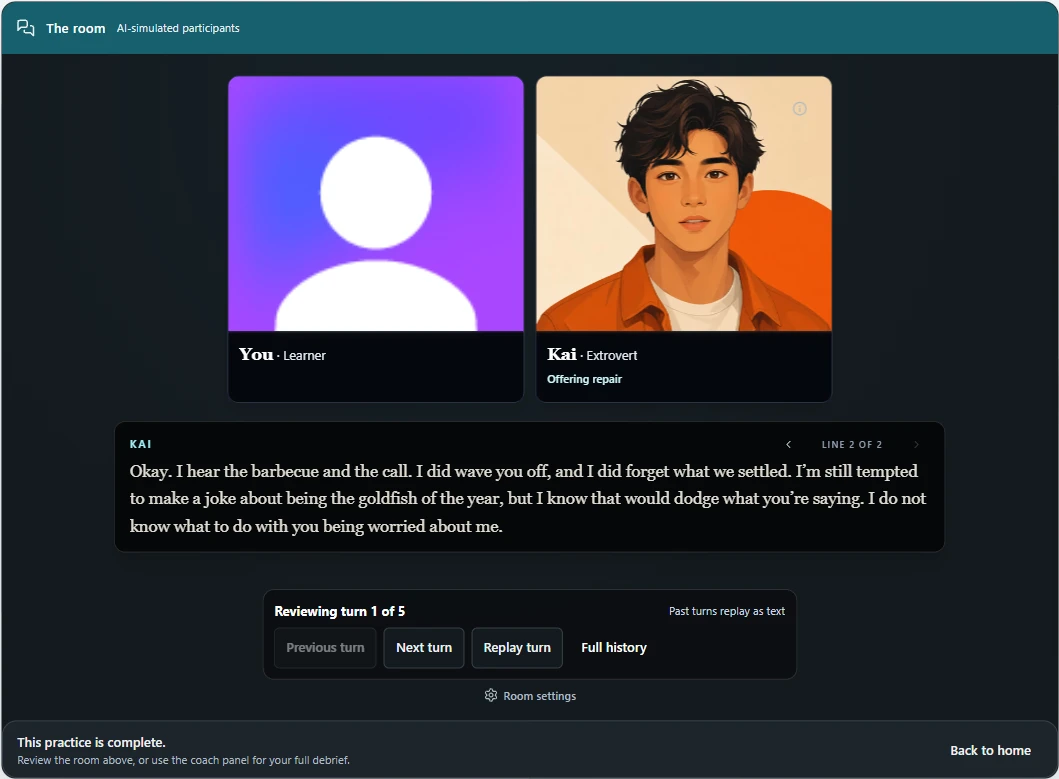
Kai acknowledges the events. Her response includes:
I do not know what to do with you being worried about me.
Hear what landed
The Coach’s recorded next move is:
You could let the concern stand for a moment and ask what she heard you saying.
The learner does that. Kai repeats the concern in her own words and says that she can hear it, even though she does not love hearing it. The next choice is Pass, recorded as “You sit quietly.” Kai stays with the pause.
This particular practice gives us something concrete to review: how the learner stated the concern and made space for an answer. It is a fictional communication exercise, with no assessment of a real person’s drinking or health.
Feedback for the next attempt
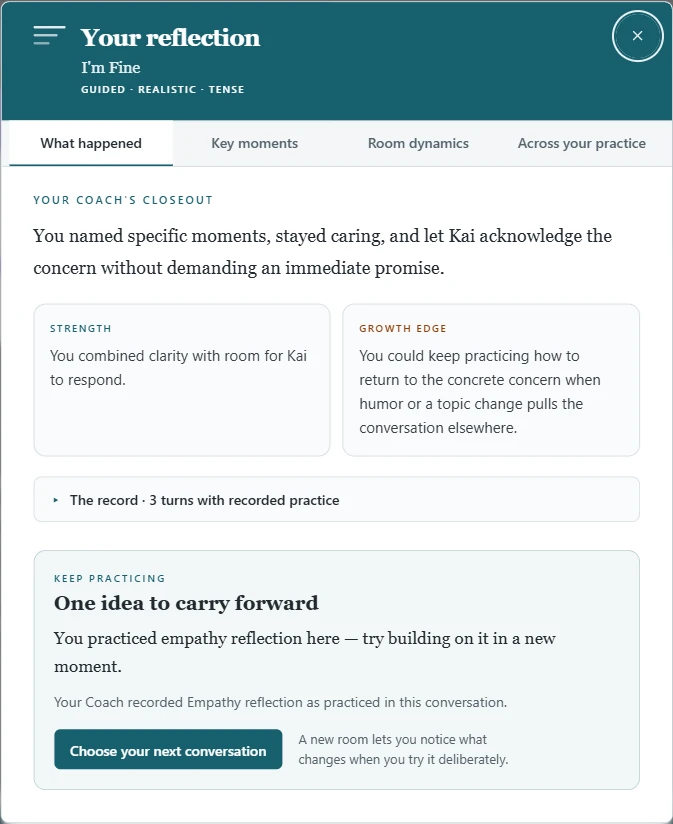
The strength is clarity combined with room for Kai to respond. The growth edge is:
You could keep practicing how to return to the concrete concern when humor or a topic change pulls the conversation elsewhere.
In this demonstration, Kai acknowledges the concern early. The growth edge points to a challenge for further practice; it does not mean this exchange tested every possible response.
Practice making your own choices
The purpose of Conversations is to give you room to act, notice, and try again. You choose your words. The Coach connects feedback to the exchange, the debrief looks across the conversation, and Insights draws together patterns across completed practices. That is how ForeverLearning AI’s aim of helping people become more capable takes shape in this application.
Review the room and choose your practice
For a lighter setting, explore the first-date conversation that gets going again through one specific detail.